)
)
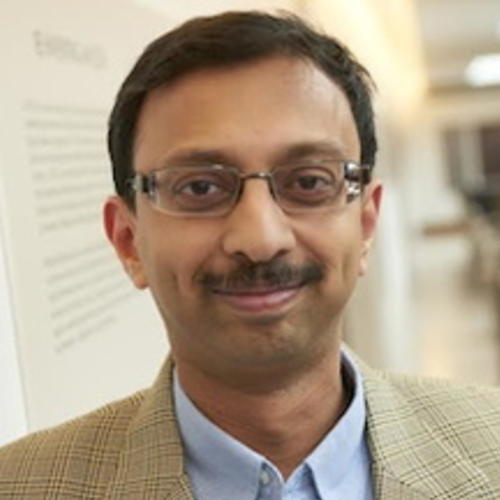
Bharat Thyagarajan
Dr. Thyagarajan is the Vice Chair for Translational Research in the Department of Laboratory Medicine and Pathology at the University of Minnesota. He is also the Program Director of the Division of Molecular Pathology and Genomics and director of the Advanced Research and Diagnostic Laboratory (ARDL). Dr. Thyagarajan spearheaded the incorporation of next generation sequencing into clinical diagnostics for inherited diseases at the University of Minnesota in 2012 and has overseen the expansion of NGS based diagnostics into oncology applications. He is currently leading the effort to incorporate long read sequencing into clinical diagnostics at the University of Minnesota. His research focus is in providing central laboratory support for large multi-center population studies.
He has worked extensively in novel biomarker development for several chronic diseases and their implementation in population based multi-center studies over the last nineteen years. He is the central laboratory PI for several large multi-center studies: the Long Life Family Study (LLFS), the Health and Retirement Study (HRS), the Asian American Cohort Study (MOSAAIC), the Coronary Artery Risk Development in Young Adults (CARDIA) and Atherosclerosis Risk in Communities (ARIC). In addition, I am also a Co-Investigator in cohorts such as the Hispanic Community Health Study (HCHS), the High School and Beyond Study (HS&B) and the National Longitudinal Study 1972 (NLS72). He oversees the design and implementation of biological sample collection, biorepository development and implementation, biomarker analyses and quality assurance procedures in all these studies.
His research interest has focused on studying evolution of biomarkers over the life course, identifying biomarkers for early detection of diseases and understanding the mechanistic pathways that underlie the social and biological determinants of health with a specific focus on identifying immune related biomarkers relevant for healthy aging.
Sessions
-
One Run, Every Variant: Simplifying Complex Diagnostics through Long-Read Sequencing03-Jun-2026Innovation Stage
-
Panel Discussion: How Do The Sequencing Technology Advancements Drive Translational Research?03-Jun-2026Innovation Stage